
Curriculum by Subject
Computing
Design Technology
Geography
History
Maths
Mathematics is a powerful and universal language. It is a lifelong skill, and we aim to instil in our children, a passion for the subject. We want them to see the value of mathematics beyond the classroom and understand how it is relevant to their everyday lives and future. By nurturing a love of the subject, we hope to inspire our children to remain curious and excited about mathematics.
We promote success for all children through a well-sequenced curriculum, effective pedagogy, and regular assessment to strengthen and deepen learning. We believe in providing a positive, supportive, inclusive, and challenging environment where all children can develop a strong foundation in mathematics and become confident learners. Our curiculum Lapal is built on the belief that every child can succeed in maths.
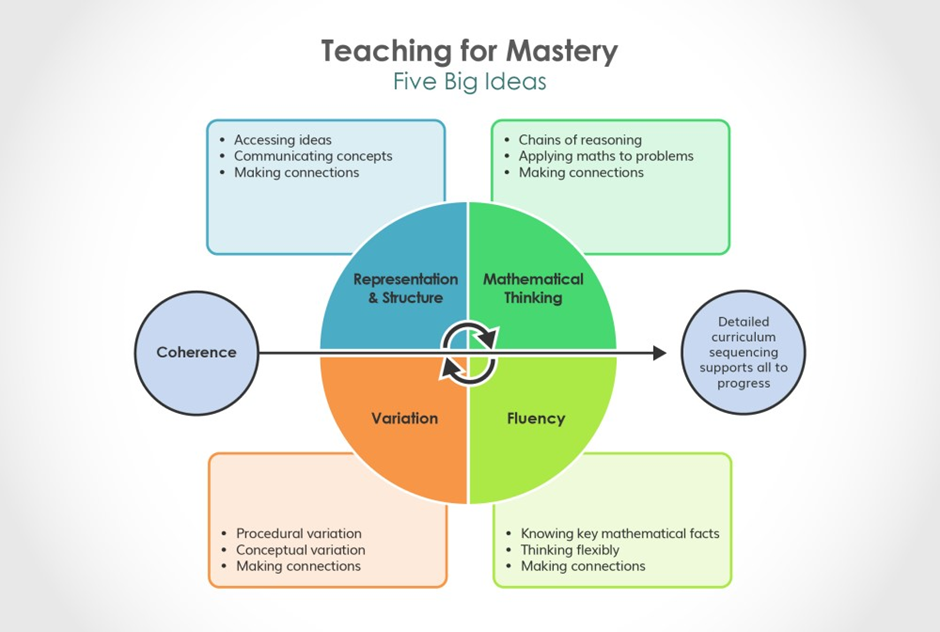
Our maths curriculum is underpinned by the five big ideas: coherence, representation and structure, mathematical thinking, fluency and variation. Teaching for Mastery ensures all children make connections and develop a deep and secure foundation in mathematical concepts, enabling them to apply their knowledge confidently in a variety of contexts.
Our vision for maths
- We aim for every child to:
- Develop a deep understanding of mathematical concepts
- Become fluent in key facts and methods
- Reason confidently using precise mathematical language
- Apply their knowledge to solve problems in a range of contexts
- Build a positive attitude towards maths and a belief that effort leads to success
How we teach maths
Our teaching follows the Teaching for Mastery approach supported by the National Centre for Excellence in the Teaching of Mathematics (NCETM). This means
- Whole Class Teaching – All children learn together so everyone has access to the full curriculum. Support and challenge are built into every lesson to promote success for all.
- Small, Connected Steps – Concepts are introduced gradually so children build secure understanding. Lessons are carefully sequenced to ensure progression across school.
- Concrete – Pictorial – Abstract (CPA) – Children learn using practical equipment, visual representations and abstract notation. This helps them see the maths and understand the structure behind it.
- Mathematical Talk – Discussion is central to learning. Children explain their thinking using full sentences and key vocabulary. This strengthens and builds confidence.
- Fluency, Reasoning and Problem Solving - Every lesson includes opportunities to practise these skills, reason mathematically and apply learning to new problems.
Concrete, Pictorial, Abstract (CPA)
The mastery approach incorporates objects, pictures, words, numbers and symbols to help children to explore and demonstrate mathematical ideas. All pupils, when introduced to a new concept, should have the opportunity to build competency in this topic by using the CPA approach. Pupils are encouraged to physically represent mathematical concepts. Objects and pictures are used to demonstrate and visualise abstract ideas, alongside numbers and symbols.
Concrete: children have the opportunity to use concrete resources to help them to understand and explain what they are doing. Children might begin by handling real objects, such as apples, and then move on to using physical representations of those objects, for example counters.
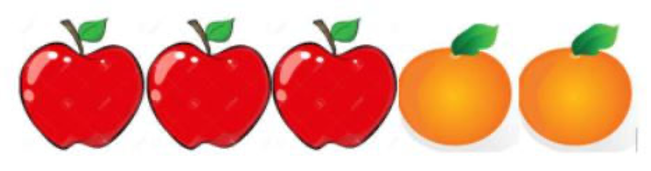
Pictorial: children then build on this concrete approach by using pictorial representations, which can then be used to reason and solve problems. Drawings act as a bridge between the concrete objects that the children have been using and the abstract symbols that they must learn to use.
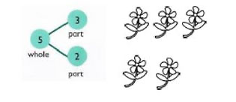
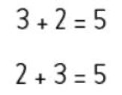
Abstract: With the foundations firmly laid, children can move to an abstract approach using numbers and key concepts with confidence.
Our Maths Curriculum
We follow a carefully sequenced curriculum from Reception to Year 6, that:
- Aligns fully with the National Curriculum
- Builds strong foundations in number sense
- Ensures progression in calculation, geometry, measure, statistics and algebra
- Makes meaningful links across mathematical ideas
- Prepares children for the next stage of their education
Power Maths (Years 1-6)
We use the Power Maths programme to support high‑quality teaching. Power Maths is a mastery curriculum that:
- Builds concepts in small steps
- Uses engaging real‑life problems
- Encourages collaboration and discussion
- Provides structured practice and reflection
- Supports teachers in identifying misconceptions early
Click here for a parent guide to Power Maths.
Please click on the year group below to see the Maths curriculum coverage for the academic year:
How we teach calculations
We have a policy to show the progression for each calculation across our school.
Maths in the Early Years
In Reception, children learn through hands‑on exploration, high‑quality interactions and carefully planned provision. They develop early number sense, pattern awareness and spatial reasoning — the foundations for later success.
Supporting Every Child
We are committed to ensuring all children thrive in maths, including those with SEND and those who grasp concepts quickly.
Adaptive Teaching
Teachers adjust support within lessons so all children can access the same ambitious curriculum. This may include:
• Additional modelling
• Scaffolds and manipulatives
• Pre‑teaching or over‑learning
• Targeted questioning
• Strengthening tasks help children secure key ideas
• Deepening tasks challenge children to think more deeply without moving them on to new content
Assessment in Maths
Assessment is ongoing and purposeful. Assessment helps us plan teaching that meets the needs of all learners and ensures children keep up, not catch up.
Teachers use:
- Daily formative assessment through questioning, discussion and observation
- End‑of‑unit checks to identify strengths and next steps
- Termly assessments to track progress
- Question Level Analysis (QLA) to identify class trends and misconceptions, including noticing when foundational knowledge might need to be strengthened to ensure future success
Times Tables and Number Fluency
Times Tables Rock Stars (TTRS)
Children from Year 2 upwards use TTRS to build rapid recall of multiplication facts in a fun, engaging way. This supports success in the Year 4 Multiplication Tables Check (MTC).
NumBots
Younger children use NumBots to develop strong addition and subtraction fluency.
Mastering Number (EYFS, KS1 and KS2)
Daily short sessions build deep understanding of number relationships, helping children move beyond counting in ones. This approach is embedded in EYFS, KS1 and Years 3, 4 and 5.
How Parents Can Help
You can support your child by:
- Talking positively about maths
- Practising number bonds and times tables
- Encouraging your child to explain their thinking
- Using everyday opportunities (shopping, cooking, measuring) to explore maths
- Supporting regular use of TTRS or NumBots as well as Century
Modern Foreign Languages
PSHE
Reading
We aim to share our love of reading with all of our pupils at Lapal and encourage them to choose books that are interesting, enjoyable, from varied authors and those that challenge. We encourage all pupils to continue their reading at home using tools in their individual pupil planner to support this and ensure consistency between home and school. Pupils in EYFS and KS1 are taught to read through Little Wandle and pupils from year 3 to 6 have a 30 minute reading lesson, 4 times each week. This develops our pupils’ reading skills through VIPERS linked to the national curriculum and through a shared text in group discussion.
All children at Lapal have an individual pupil planner, which contains a daily reading diary so that pupils, parents and staff can track their reading. It is the school’s expectation that the diary should be completed daily by a member of staff, parent or carer to ensure that regular and daily reading opportunities are provided in and out of school.
Early Reading
At Lapal, we prioritise the development of early reading by putting reading at the heart of everything we do. Through the use of robust and systematic teaching of phonics this provides an effective transition into independent reading, which then subsequently encourages our older pupils to read widely and deeply. Phonics is undoubtedly an essential tool here but as a school, we are aware that whilst phonic knowledge enables pupils to decode words, it does not teach them to know their meaning. We achieve this by providing opportunities for our pupils to sing, hear and join in with stories, to gain an understanding of what words actually mean through early, verbal comprehension. These solid and secure foundations are then built upon to enable the children of Lapal to be fluent, confident readers and adopt a love for reading.
Phonics
We want to help all of our children at Lapal to become successful readers, who love reading. In order to decode (read) words, children are taught through a systematic phonic approach following the Little Wandle Letters and Sounds Revised scheme which captivates our children. Daily, discrete phonics sessions are taught in whole class groupings and sessions are fast paced, interactive and challenging. Children are encouraged to apply their phonics skills across all curriculum areas (and have further opportunities to apply enhanced provisions in EYFS and home learning.) We hold an annual parent workshop for EYFS & KS1 in the first half of the autumn term to share our approach to the teaching of synthetic phonics, which is then followed up by parent drop in sessions for EYFS to enable parent and carers to work alongside their child in a phonics session to see how it is taught at Lapal, to enable them to support and continue this at home.
The Little Wandle website provides resources to help you support your child with saying their sounds and writing their letters. There are also some useful videos so that you can see how phonics is taught at school and feel confident about supporting your child with reading at home. Use the link below to be redirected the the Little Wandle website.
https://www.littlewandlelettersandsounds.org.uk/resources/for-parents/
Click on the image above to access the Little Wandle Parent Information Pack and see how you can continue to support your child with reading and phonics at home.
Reading Books
Children start taking home a reading book in EYFS. This follows the Collins Big Cat phonics books scheme, which we ensure are linked to the phonics phase and sounds that the children are currently learning to allow for application and retention. Year 1 and Year 2 pupils continue with these books until they move on to the Rigby Star independent books and then the KS2 Collins Big Cat books. Pupils can also regularly take home extra books from the ‘home readers box’ which is linked to the book band that they are on. This means they can read additional books if they wish, at the correct level of challenge and change these as frequently as they choose.
Once pupils complete the school’s reading scheme books, they become a ‘free reader’ where they can read any books of their choosing, from the class book corner, books from home or from the array of books in our school library. Whilst the children are able to read books of their choosing, staff will still monitor these to ensure there is challenge and pitch.
Reading for Pleasure
At Lapal Primary School we believe that reading should be a fundamental skill which is developed to support lifelong learning. Our aim is to develop and embed a strong, sustainable reading culture and reading community, where our confident and competent readers will foster a love of reading through exposure to rich and varied literature, in which they are empowered to exercise their freedom of choice and independence. Inspiring children to read for choice is their fundamental right, which underpins strong foundations for our pupils to be successful through the wider curriculum and beyond.
Since 2019, Lapal has been part of a Teacher Reading group (TRG) linked to the Open Universities Reading for Pleasure initiative. Our vision was to ensure that not only do our pupils become proficient readers, but they also develop a love of literature and take pleasure in reading. Through strategic planning, our multifaceted approach has led to children being immersed in rich literature, which has enabled them to broaden and diversify their repertoire of authors and reading materials. This was further recognised by OFSTED, who confirmed that reading has been placed at the heart of our school.
One key driver for embedding reading for pleasure at Lapal was to ensure that staff subject knowledge of children’s literature was broad and diverse and found that this was imperative in order to expose children to a wide range of quality texts, where staff effectively model the pleasure and enjoyment that can be derived from reading. Pupils at Lapal are also encouraged to express their rights as a reader by having choice and freedom to read for pleasure. We are passionate about promoting children to become intrinsically motivated to read, rather than reading for recognition or reward.
As a result of our work around reading for pleasure, we were awarded the 2021 Farshore Reading for Pleasure Teacher Award for the category of ‘Whole School’. We were so proud of the recognition we received for our inspiring work around reading for pleasure and for the steps we have taken to build a highly effective reading community.
Click here to read Lapal's winning entry
Click here to see the video of our award being announced at the Farshore 2021 Reading for Pleasure Teacher Award Ceremony.
Literature Maps
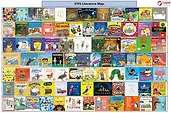
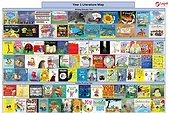
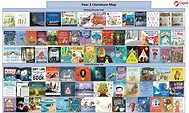
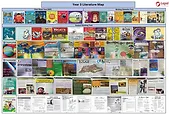
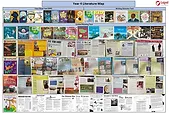
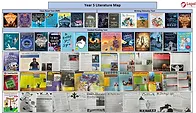
To support us in ensuring that we broaden and diversify the repertoire of authors and reading materials that our pupils read, we have created year group specific Literature Maps, which demonstrate to show staff, pupils and parents the breadth of literature our pupils will be exposed to during each year group throughout school. This also incorporated engaging authors, topical books, books around themes such as challenging stereotypes, our local area and books that engage reluctant readers and challenge greater depth readers. These are ever-evolving maps, which will continue to be updated regularly to add new authors, new genres and new themes to ensure our children's exposure to literature continues to broad and and diverse.
School Library
We have a fantastic new library located in KS1, which has been stocked with lots of brand new books that the children asked for, including new authors, new topics and those that cover current issues worldwide. The library has a booking in and booking out system that is led by the school librarians from KS2, enabling all pupils from KS1 to choose a library book each week.
We are currently developing plans to enhance the KS2 library also. New books have already been purchased for KS2 based around authors pupils have asked for, curriculum topics and books that address well-being, mental health and worldwide subjects.
At Lapal, we encourage our pupils to access their local libraries, tapping into the events and opportunities that they provide, as well as accessing the wealth of books on offer. This information is displayed in our school entrance and updates feature on our newsfeed on the school website.
Wider Reading Opportunities
At Lapal, we strive to enrich the children’s love and enjoyment for reading by providing wider opportunities throughout our curriculum and differing times during the school day.
We always join in with annual reading and book events such as Roald Dahl Day & World Book Day to encourage and inspire children to share their favourite books and authors, but to also discover new books and authors from which they have not yet read. This is also promoted through Trust events such as the annual book quiz, where a team of pupils are quizzed on specific books from which they have read, to test and develop their reading skills such a retrieval and inference skills as well as author knowledge.
With the use of our refined knowledge organisers, we promote further reading through our curriculum by providing ‘Recommended Reads’ linked to each topic in History, Geography and Science. This enables us to promote wider reading opportunities linked to a range of topics and subjects, enabling pupils to become familiar with subject specific vocabulary and key knowledge.
Religious Education
Religious Education Curriculum Map
Right to Withdraw from Religious Education (RE)
In line with statutory requirements, Religious Education (RE) is taught to all pupils as part of the school curriculum. However, parents and carers have the legal right to withdraw their child from all or part of RE, if they wish.
If you are considering withdrawal, we encourage you to contact the Headteacher to discuss your request. This helps us ensure we understand your wishes, explain how RE is taught in our school, and make suitable arrangements for your child.
We fully respect and support the rights of parents and carers in this matter, as set out in the Education Act 1996 and School Standards and Framework Act 1998.
Science
Social, Moral, Spiritual and Cultural (SMSC)
What is SMSC?
Social, Moral, Spiritual and Cultural development incorporates all of the experiences, planned and unplanned, received by young people in the course of their time in school that promotes their spiritual, moral, social, cultural, mental and physical development, and thus the wellbeing of both the individual and ultimately the wider community. We ensure that pupils are given opportunities and learning experiences to help them to prepare for life in modern Britain and to understand British values.
Our Character Education curriculum helps to give children the knowledge, skills, and understanding they need to lead confident, healthy, independent lives and to become informed, active, responsible citizens in a rapidly changing world. In undertaking character education and life in modern Britain, children learn to recognise their own worth, work well with others, and become increasingly responsible for their own learning. They learn to understand and respect our common humanity, diversity and differences. They find out about political and social institutions which affect their lives, as well as their rights and duties as individuals and members of society. We recognise that the personal development of pupils, spiritually, morally, socially and culturally plays a significant part in their ability to learn and achieve.
The areas covered by Character Education and Life in Modern Britain are as follows:
-
Developing confidence and responsibility and making the most of the children‟ s abilities.
-
Preparing to play an active role as citizens.
-
Developing a healthy, safer lifestyle.
-
Developing good relationships and respecting the differences between people.